Am I the Rocky Soil?

The Seventh Sunday after Pentecost 2026 

By Reverend Marjorie Bevans

Texts: Isaiah 55:10-13; Romans 8:1-11; Matthew 13:1-9, 18-23 

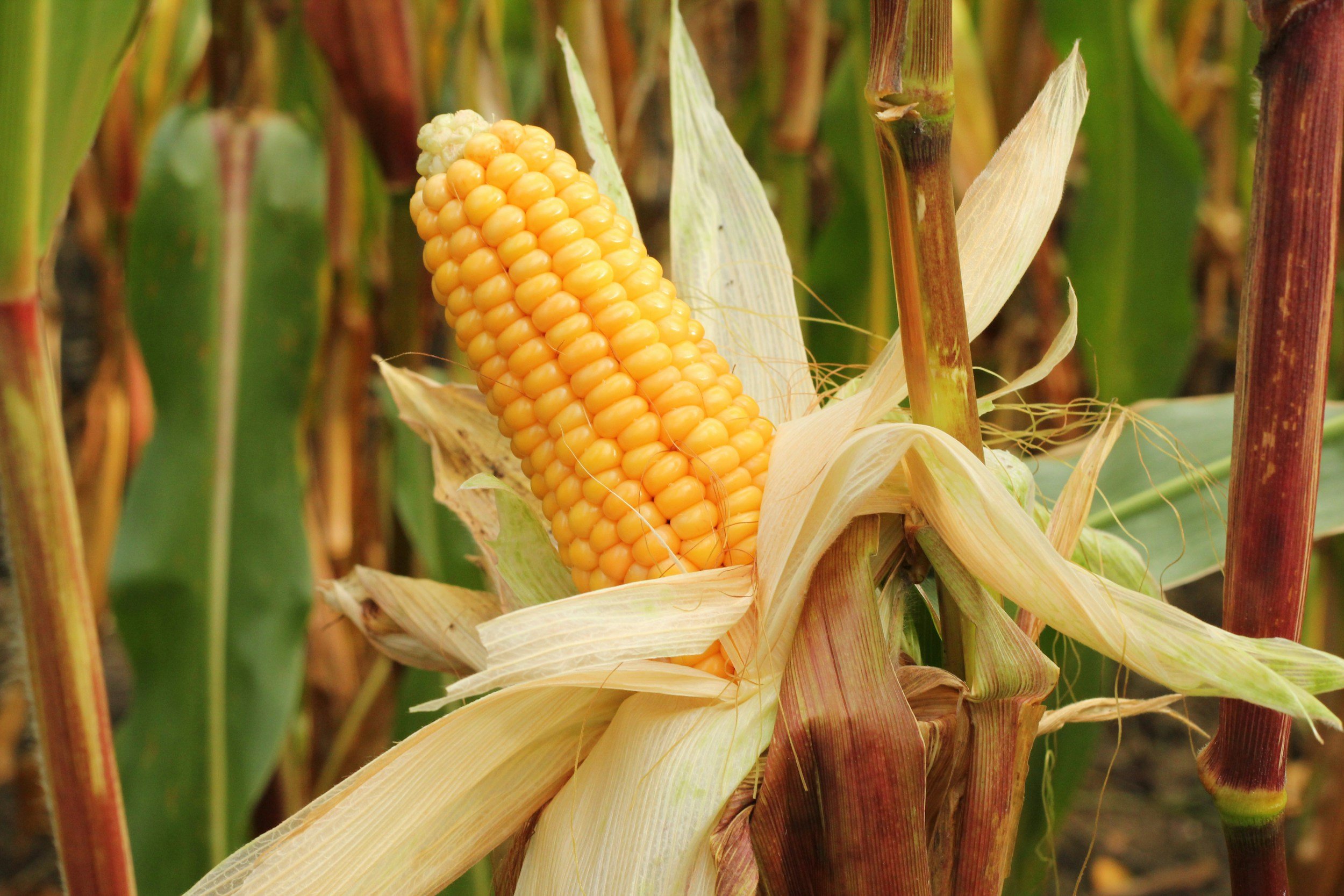
The parable of the Sower reminds me of the summer of 1975.  My family decided to plan 60 acres of 
Silver Queen corn.  We had a contract to sell it to the local IGA’s.  So, my brother Tommy and I stayed home 
from school to plow.  It took about a week because we only had a 1948 Ford 8N tractor. Then on the weekend 
my stepfather used a corn hopper to plant the seed.  Weeks later the corn was up and growing well.  Then after 90 days it was ready to be picked.  But when we went out to pick it, we discovered that in many places thistle had taken over.  The thistle didn’t choke out the corn because the thistle grew later, but it made picking the corn just miserable.  It was hard to walk through. Every morning, while the dew was still heavy, we went out to pick corn, get soaking wet and all scratched up by the thistle. But the corn was delicious and we ate plenty of it that summer. 

The lesson?  Even with a lot of effort, good things are still sometimes difficult to obtain—or use herbicide.  


Jesus spoke to the people using parables because a good parable is understandable by most people no 
matter what their level of education or insight. For example, if I talked to you about taking care of your yard, 
many if not all would understand the importance of cutting the grass regularly, pulling weeds out of beds, and raking leaves in the fall. 

Jesus uses a common experience to attract the hearer.  He then invites them to the understanding of a 
deeper truth, one that many people would not hear if it were put to them in abstract terms only. 
Life is not abstract, so perhaps the truth of God should not be either.  With Jesus every earthly story has a heavenly meaning. 

Whether or not you are a gardener, many of us would understand the frustration of sowing seed where it 
did not take root, grow, and mature.  And most of us would understand the frustration of what we did not plant taking root and taking over.  The goal we have in mind is a beautiful ripe tomato or a sweet ear of corn. 
Tending a garden is a bit like tending our relationship with God. It takes consistent, sometimes hard, work—a little each day no matter how hot it is, but the results are worth it. 

 So let us consider the interpretation of the parable of the Sower.  Why did Jesus tell it and what does he want us to know? 

But first, most preachers probably hear this lesson differently than the congregation.  This is because we are called to be Sowers of the Word of God.  The congregation is the soil. 


We preach the Word of God to a congregation of people with different personalities, experiences, and perspectives.  And the people in the congregation are usually in different places with what they most need to hear from God on a given day.  What may be a good sermon for one, is totally useless for another, depending on what kind of day each person might be having.  So, what I would most like us to consider this morning is 
“What kind of soil am I for the Word of God?” 

Am I the path? A hard place to sow the Word of God? Am I a person so beaten down that there is no place to even take in the Word of God? Am I impervious to it?  Do I not want to listen to it?

Consider whether you thoughtfully heard the lessons from Isaiah and Romans this morning. Do you remember what they were?  Did those words just bounce off you? How many times have you heard a particular lesson read in church over the years and still it seems strange? 

Am I the rocky soil? Soil superficial in nature, hearing only what will make me feel good now? Do I only hear what I want to hear? 

For example, if you listened to Paul’s Letter to the Romans, was there something in it you wanted to reject? The parable from Matthew ‘easy listening’ compared to that. 

It is tempting to get into the pattern of rejecting that which personally challenges us the most, the one 
thing we most need to hear from God to make us more Christ-like
. Sometimes we even use the tool of ‘biblical criticism’ to avoid the truth that we do not want to hear.  We reason it away or put limits on it. For example, thinking I get to determine the weight of the cross I am willing to bear to follow Jesus. I don’t think that was what Jesus meant.  

If we do not let God’s Word take deep root in us, when our faith is challenged it cannot sustain us in love and hope. Faith withers away. 

Am I the soil choked by thorns? Letting my earthly concerns overtake my heavenly calling?  Do I 
allow pressing needs and interests—work, security, friends, even family—to choke out my need for God?  Am I so divided in my attention that I allow the weeds to choke out even my desire to worship, to hear from God, to pray and give thanks to God for his graciousness to me? 

Am I the good soil? Hungry to hear the Word of God, to have it sown in my heart to strengthen my  faith, to give me wisdom and understanding, to help me love unconditionally, to bring me into the presence of God and Christ my Savior? 

If we could choose how to always hear, perhaps this would be it.  And maybe sometimes, we truly are the good soil—hard ground broken open by our deep need for God.  Confused and disoriented, helplessly empty, sometimes there awakens in us spontaneously the need to know and experience Divine love, to be forgiven our sin and our neglect of God. 

Life’s circumstances can make us good or bad soil, but being made in the image of God, gifted with reason and free will, we do have a choice how to be, how to prepare ourselves. 

Will we allow ourselves to be broken open and cultivated, ready to receive the Word, then to be nourished and watered by the Holy Spirit?  This can be life changing. 

There have been times in the past when the people of God actually lost the Word of God.  Yes, they lost the Bible, the Old Testament particularly, several times, when Israel was defeated, the temple and Jerusalem destroyed and the people taken into exile or enslaved. 

There is the story of the rediscovery of the Law of Moses in the Temple when Josiah was king.  He had never heard of the Law of Moses before, and when he heard it read for the first time, he was incredibly moved by it.  He called all the people to come and hear it, and they were hungry to hear it.  It led to a spiritual awakening and renewal, and a reformation of the people who had been corrupt. 

At another time the law was rediscovered and read to the people by the priest Ezra.  It had been generations since the people had heard the Law.  So, they were hungry to receive it, and when it was read to them the people wept and they repented of their sins. 

When have you ever been so hungry for the Word of God that you wept when you heard it?

For now, the Sower must sow, even if some seed falls on stone or in thorns.  We leave the issue in God’s 
hands, and still labor, for his seed is the very bread of the soul.  And we are forever challenged to make  ourselves a fit dwelling place for the Lord.  

Amen. 

Think You're More Important Than Others? The 12th Sunday after Pentecost 2025

Think You're More Important Than Others?  The 12th Sunday after Pentecost 2025

The problem with pride is that it quickly leads to the other sins of arrogance, presumption, malice, jealousy, anger, hostility and these sins, in turn, lead to such behavior as looking down on others, trying to control others, turning away from painful situations instead of helping, giving up when the going gets difficult, losing faith in God to bring the best in all circumstances.  What is inside of us, whether or not we are always aware of it, will be revealed in the choices we make and things we do, or neglect to do.

"Woman, you are set free from your ailment." The 11th Sunday after Pentecost

"Woman, you are set free from your ailment."  The 11th Sunday after Pentecost

The Sabbath is a chance to recover from the week of work and anxiety and prepare for the days ahead; it is a chance to come together to worship God, to hear his Word, and receive his sacraments. It takes faith to keep the Sabbath day, faith that we don’t need to get every last thing done.

Are You a Good Neighbor? The 5th Sunday after Pentecost 2025

Are You a Good Neighbor?         The 5th Sunday after Pentecost 2025

The Samaritan was not supposed to care about the stranger who was beaten and left for dead.  He had no obligation to take care of the man in the ditch.  He didn’t know him, wasn’t related to him, maybe the man was Jewish.  Samaritans were not supposed to interact with Jews.

June 23, 2024 Fifth Sunday after Pentecost

5th Sunday after Pentecost 2024

Text: Mark 4:35-41

Did you ever have the experience as a young child of being so sleepy, so tired that you were falling asleep before you could get to bed? I vaguely remember when I was probably about 5 or 6 I was so tired to go up to bed on my own. I remember my dad picking me up and putting me over his shoulder. He carefully took me upstairs to my bedroom and gently rolled me off his shoulder onto my bed, and he tucked me in. That feeling of being carried by someone who loves you has never left me. I felt so safe in my dad’s arms.

We took a Holy Hike yesterday, and one of the children needed to be carried by her dad. I walked behind them and watched as she fell asleep over his shoulder as we walked along. It reminded me of that feeling of safety I had felt.

Perhaps Jesus felt the same way in the boat. He was in the stern asleep on a cushion while a storm tossed the boat. His Father was watching over him. Jesus knew he was safe in God’s hands.

The disciples were afraid so they woke him up, and he stilled the sea. “Why are you afraid? Have you still no faith?”

People who have done tremendously brave things—like rescuing injured soldiers in the midst of a battle, or swimming into rough water to rescue someone who is drowning, or running into a burning house, are not people who lack fear. They have courage. Their courage overcomes their fear. Their concern, their love for another person drives them to do what others consider heroic.

In Jesus’ prayer to the Father in the Garden of Gethsemane, the night before his crucifixion, we could see he had real fear about what was to happen to him. “My Father if it is possible, let this cup pass me by. Yet not my will but yours.” He was so afraid he was sweating blood. Jesus’ love for the disciples and all human beings whose souls would be lost without his sacrifice overcame his fear. He entrusted his life into the hands of his Father. He would pass through his crucifixion to the place of eternal safety.

So, what does Jesus mean when he seems to be saying ‘faith’ replaces ‘fear’? Fear is a powerful human emotion. We have a strong desire to be in a place of safety. It’s natural, we want to live, we afraid to suffer. It’s primal. So how can faith in God overcome such a strong instinct to survive within us, that was put into us by God in the first place?

When we come to know and trust God as our eternal Father, when we are grateful for everything he has given us—life, family, everything we need to live—we develop a sense of how much he loves us. We can actually begin to feel that he is protecting and carrying us. Just as it seems natural for us to love our own Fathers it becomes natural for us to love God the Father. He is the ideal of all fathers. In loving God, we want to please him, to seek his will for us, to be faithful.

That’s what I thought I was doing when I found myself all alone on an airstrip in the Arctic winter. My friends and family probably thought I had lost my mind. After the pilot of the plane helped me unload all my stuff, we both looked over to the village, which was about a mile away. He said, “I don’t think anyone’s coming to get you.” Communication in the Arctic back then was often unreliable. Maybe they really didn’t know I was coming that day. I remember thinking, “I know God wants be to be here, maybe it’s to get to this point to freeze.” Then the pilot said, “Do you want to put your stuff back in the plane?” I said no. So the pilot took off and circled around the village a couple of times to get someone’s attention. Harriet Tukrook, who was driving the truck for the polar bear watch, saw me with all my stuff at the airstrip, and she came out. I may have lost my mind, but I thought I was being faithful to God. He protected me in my foolishness.

As we walk this life trusting in God there will be times when it is scary to do the right thing, the good thing, to speak the truth in love, to value the life of a stranger so much that we are surprised to find within us the courage to save them, or to travel to a dangerous place to tell others about the love of God. We are all bundles of mixed motives, and discerning the will of God for us is sometimes difficult. That’s what Jesus was expressing in his prayer in Gethsemane. Mere human beings often get it wrong, and we revert to the survival instinct, to be selfish sometimes. It is trust in God, faith, that helps us break out of the place of fear to do the thing God needs us to do in the moment.

Trusting God the Father can be like having your own father carrying you on his shoulder to a place of safety. This is how I believe ‘faith’ can overcome ‘fear.’ This deep sense of being in the hands of God gives us courage to seek his will, to love him in return for all the many, many blessings we have enjoyed. In this broken world, we are all God’s children, and like a natural father, he has hopes and dreams for us. So, let us together seek his will for us, individually and as a parish. Amen.