The Seventh Sunday after Pentecost 2026
By Reverend Marjorie Bevans
Texts: Isaiah 55:10-13; Romans 8:1-11; Matthew 13:1-9, 18-23
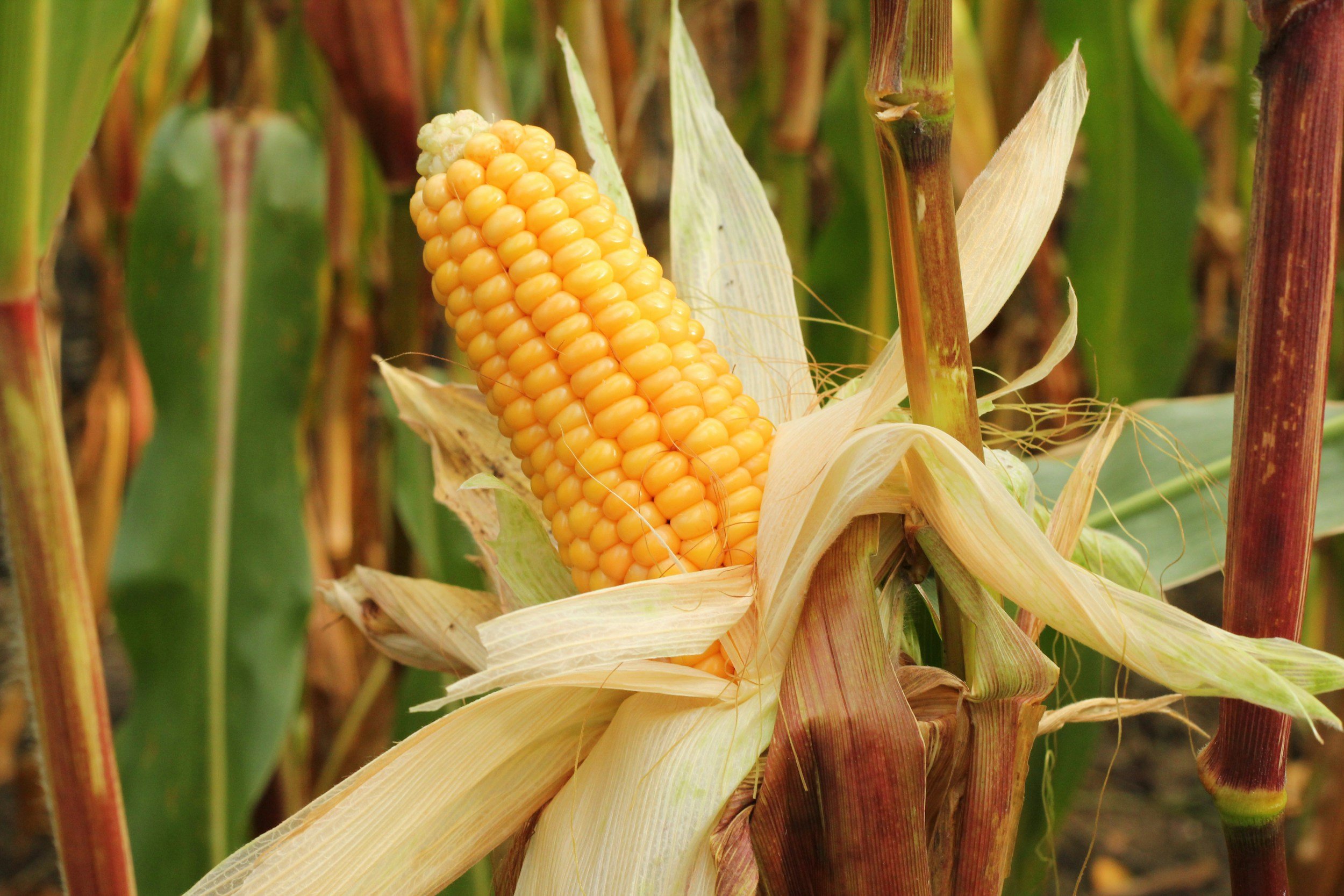
The parable of the Sower reminds me of the summer of 1975. My family decided to plan 60 acres of
Silver Queen corn. We had a contract to sell it to the local IGA’s. So, my brother Tommy and I stayed home
from school to plow. It took about a week because we only had a 1948 Ford 8N tractor. Then on the weekend
my stepfather used a corn hopper to plant the seed. Weeks later the corn was up and growing well. Then after 90 days it was ready to be picked. But when we went out to pick it, we discovered that in many places thistle had taken over. The thistle didn’t choke out the corn because the thistle grew later, but it made picking the corn just miserable. It was hard to walk through. Every morning, while the dew was still heavy, we went out to pick corn, get soaking wet and all scratched up by the thistle. But the corn was delicious and we ate plenty of it that summer.
The lesson? Even with a lot of effort, good things are still sometimes difficult to obtain—or use herbicide.
Jesus spoke to the people using parables because a good parable is understandable by most people no
matter what their level of education or insight. For example, if I talked to you about taking care of your yard,
many if not all would understand the importance of cutting the grass regularly, pulling weeds out of beds, and raking leaves in the fall.
Jesus uses a common experience to attract the hearer. He then invites them to the understanding of a
deeper truth, one that many people would not hear if it were put to them in abstract terms only.
Life is not abstract, so perhaps the truth of God should not be either. With Jesus every earthly story has a heavenly meaning.
Whether or not you are a gardener, many of us would understand the frustration of sowing seed where it
did not take root, grow, and mature. And most of us would understand the frustration of what we did not plant taking root and taking over. The goal we have in mind is a beautiful ripe tomato or a sweet ear of corn.
Tending a garden is a bit like tending our relationship with God. It takes consistent, sometimes hard, work—a little each day no matter how hot it is, but the results are worth it.
So let us consider the interpretation of the parable of the Sower. Why did Jesus tell it and what does he want us to know?
But first, most preachers probably hear this lesson differently than the congregation. This is because we are called to be Sowers of the Word of God. The congregation is the soil.
We preach the Word of God to a congregation of people with different personalities, experiences, and perspectives. And the people in the congregation are usually in different places with what they most need to hear from God on a given day. What may be a good sermon for one, is totally useless for another, depending on what kind of day each person might be having. So, what I would most like us to consider this morning is
“What kind of soil am I for the Word of God?”
Am I the path? A hard place to sow the Word of God? Am I a person so beaten down that there is no place to even take in the Word of God? Am I impervious to it? Do I not want to listen to it?
Consider whether you thoughtfully heard the lessons from Isaiah and Romans this morning. Do you remember what they were? Did those words just bounce off you? How many times have you heard a particular lesson read in church over the years and still it seems strange?
Am I the rocky soil? Soil superficial in nature, hearing only what will make me feel good now? Do I only hear what I want to hear?
For example, if you listened to Paul’s Letter to the Romans, was there something in it you wanted to reject? The parable from Matthew ‘easy listening’ compared to that.
It is tempting to get into the pattern of rejecting that which personally challenges us the most, the one
thing we most need to hear from God to make us more Christ-like. Sometimes we even use the tool of ‘biblical criticism’ to avoid the truth that we do not want to hear. We reason it away or put limits on it. For example, thinking I get to determine the weight of the cross I am willing to bear to follow Jesus. I don’t think that was what Jesus meant.
If we do not let God’s Word take deep root in us, when our faith is challenged it cannot sustain us in love and hope. Faith withers away.
Am I the soil choked by thorns? Letting my earthly concerns overtake my heavenly calling? Do I
allow pressing needs and interests—work, security, friends, even family—to choke out my need for God? Am I so divided in my attention that I allow the weeds to choke out even my desire to worship, to hear from God, to pray and give thanks to God for his graciousness to me?
Am I the good soil? Hungry to hear the Word of God, to have it sown in my heart to strengthen my faith, to give me wisdom and understanding, to help me love unconditionally, to bring me into the presence of God and Christ my Savior?
If we could choose how to always hear, perhaps this would be it. And maybe sometimes, we truly are the good soil—hard ground broken open by our deep need for God. Confused and disoriented, helplessly empty, sometimes there awakens in us spontaneously the need to know and experience Divine love, to be forgiven our sin and our neglect of God.
Life’s circumstances can make us good or bad soil, but being made in the image of God, gifted with reason and free will, we do have a choice how to be, how to prepare ourselves.
Will we allow ourselves to be broken open and cultivated, ready to receive the Word, then to be nourished and watered by the Holy Spirit? This can be life changing.
There have been times in the past when the people of God actually lost the Word of God. Yes, they lost the Bible, the Old Testament particularly, several times, when Israel was defeated, the temple and Jerusalem destroyed and the people taken into exile or enslaved.
There is the story of the rediscovery of the Law of Moses in the Temple when Josiah was king. He had never heard of the Law of Moses before, and when he heard it read for the first time, he was incredibly moved by it. He called all the people to come and hear it, and they were hungry to hear it. It led to a spiritual awakening and renewal, and a reformation of the people who had been corrupt.
At another time the law was rediscovered and read to the people by the priest Ezra. It had been generations since the people had heard the Law. So, they were hungry to receive it, and when it was read to them the people wept and they repented of their sins.
When have you ever been so hungry for the Word of God that you wept when you heard it?
For now, the Sower must sow, even if some seed falls on stone or in thorns. We leave the issue in God’s
hands, and still labor, for his seed is the very bread of the soul. And we are forever challenged to make ourselves a fit dwelling place for the Lord.
Amen.
